About me
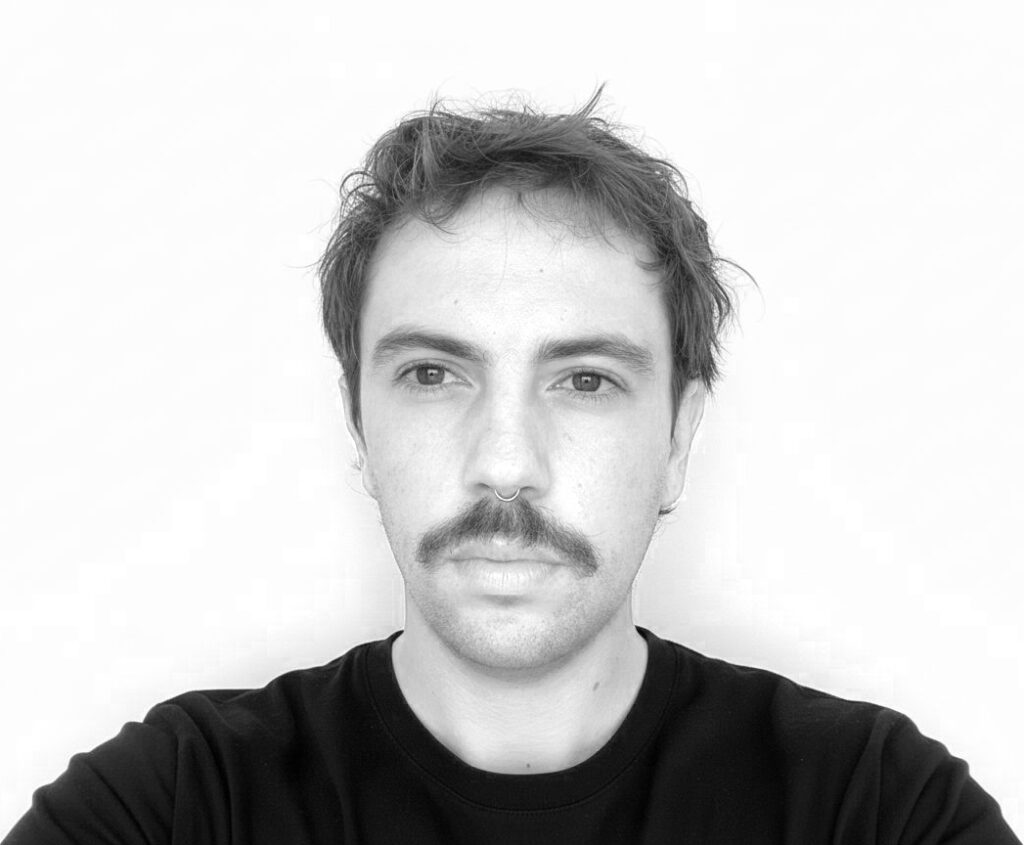
Hi, I’m Arnau, a Barcelona-based architect who studied at ETSAB-UPC.
I’m I’m passionate about urbanism and understanding how cities work, but I also have a deep love for drawing—I really value the expressive power of illustration in architecture.
I’ve really enjoyed the projects I worked on during my degree and have gained experience working in different studios along the way. This portfolio collects my work and experience so far.
Thanks for stopping by, and I hope you enjoy it!
CV
Education
→
September 2018 – June 2024
Barcelona School of Architecture (ETSAB, UPC)
BACHELOR’S DEGREE IN ARCHITECTURE STUDIES (GArqEtsaB)
Awarded Honors (Matrícula d’Honor) in: Theory Fundamentals, Mathematics II, Design Studio II Fundamentals, Urbanism II, Design Studio IV, Urbanism IV, Architectural Representation IV, and Urbanism V.
Final Thesis Grade: 9.00
GPA: 7.85
→
September 2024 – June 2025
Barcelona School of Architecture (ETSAB, UPC)
MASTER’S DEGREE IN ARCHITECTURE (MArqEtsaB)
Final Project Grade: 9.00
→
August 2022 – July 2023
Faculty of Architecture and Urbanism, University of São Paulo (FAU-USP)
MOBILITY PROGRAM
→
June 2025 – July 2025
Tongji University Shanghai, UPC Scholarship
SUMMER COURSE: «Digital Islands for Urban Development»
→
May 2024 – July 2024
Geoinnova Training
QGIS COURSE: INTRODUCTION TO GEOGRAPHIC INFORMATION SYSTEMS
Experience
→
July 2020 – January 2021
RESEARCH ASSISTANT WITH EULÀLIA GOMEZ ESCODA
Graphic production and research support for “The Urbanism of Food: Polarity and Proximity Around Municipal Markets«.
Barcelona Quaderns d’Història, no. 29, September 2024, pp. 477-494.
→
July 2021 – January 2022
RESEARCH ASSISTANT WITH EULÀLIA GOMEZ ESCODA
Graphic production and research support for «Proximity and temporality: The role of weekly markets in the metropolitan food system of Barcelona«.
KANTAREK, A.A., et al. (eds.). XXIX International Seminar on Urban Form. ISUF 2022 Urban Redevelopment and Revitalisation. A Multidisciplinary Perspective. Lodz: Lodz University of Technology Press, 2023, pp. 380-391.
→
January 2022 – July 2022
RESEARCH ASSISTANT WITH CARLES CROSAS
Graphic production and research support for «The possibilities of the subsoil» with the team of Carles Crosas, Joan Solà, and Rosina Vinyes for a commission from the Barcelona City Council.
→
October 2023 – February 2024
INTERNSHIP PROGRAM AT LEKU STUDIO
Participation and creation of graphic material for various tactical urbanism projects in the Barcelona Metropolitan Area. Support in drafting Executive Projects. Updating and maintaining the firm’s social media.
→
July 2020 – January 2022
RESEARCH ASSISTANT WITH EULÀLIA GOMEZ ESCODA
Graphic production and research support for «The Permanence of Plot Structure in the Confi guration of Ground Floors A Morphological Dissection of Four Blocks in Barcelona’s Eixample Grid«.
Built Environment, 51(2), pp. 255-273.
→
April 2024 – July 2025
INTERNSHIP PROGRAM AT JORNETLLOPPASTOR Arquitectes
Collaboration in the preparation of executive projects for the development of territorial planning: Master Plan of Bellaterra (Cerdanyola del Vallès), Special Plan for the Historic Center of Coria (Extremadura), and MPGM Clot-Camp de l’Arpa.
→
October 2025
2025 International Cooperation Program with UPC
Participation in the development of a tactical urbanism project in the Rocinha favela, Rio de Janeiro.
→
October 2026 – Present
Junior Architect at VORA ARQUITECTURA
Active collaboration in project development from the conceptual phase to construction details. Currently focused on the technical development of executive reurbanization projects, highlighting the interventions at El Rost (Alella) and Riudaura (Platja d’Aro).
Awards and recognition
→
November 2024
UPC ALUMNI AWARD
→
May 2025
AJAC AWARDS HONORABLE MENTION (XIV edition)
For the Final Thesis «Na 25: a popular commercial street in the center of São Paulo.»
Other
Software & skills
AutoCAD
SketchUp
WordPress
Rhino + Grasshopper
QGIS
Adobe Photoshop
Adobe InDesign
Microsoft Office
Languages
Catalan: Native
Spanish: Native
English: Intermediate
Portuguese: Intermediate
More
Driving license (Spain)
Leisure education instructor certificate (Spain)
Built projects
Children’s playground in Rocinha (Rio de Janeiro)


–
+
October 2025
International cooperation program with the UPC
The project develops a tactical and participatory urbanism intervention at the Rocinha Ecological Park in Rio de Janeiro, in collaboration with the APER collective (Amigos do Parque Ecológico da Rocinha), local residents, UFRJ and PUC as partner universities, and students from ETSAB-UPC.
The proposal focuses on revitalizing the park’s children’s area through cleaning, painting, planting, and the collective transformation of the space. The process was built through open workshops, on-site work, and dialogue with the local community, incorporating imagery linked to Brazilian fauna, flora, and folk and popular culture into part of the design.
Rather than a one-off physical intervention, the project views public space as a tool for encounter, collective appropriation, and community activation. folclórica y popular brasileña.
Academic projects
The urban factory


–
+
June 2025
Master’s Final Project
The Master’s Thesis, The Urban Factory, falls within the program’s urban planning track and was developed as part of the studio focusing on the transformation and consolidation of the Besòs River area.
Drawing from its industrial heritage and the historical role it has played in the development of Barcelona, the project proposes a strategy that seeks to preserve the existing productive fabric while opening it up to the city and providing it with a new urban dimension.
The proposal understands that the industrial warehouse can evolve beyond its original use, becoming a hybrid facility where production—reinterpreted through workshops, laboratories, and innovation spaces—coexists with new programs: education, housing, commerce, and local services. This functional mix allows industrial activity to lose its exclusive character and become part of a broader ecosystem, connected to the daily life of the neighborhood and the metropolitan city. The project relates directly to the historical axes leading towards the river, reclaiming ancient paths and streams as urban connectors.
The Urban Factory is established as a key piece within a territory read through its relationship with water, creating a dialogue between the fluvial landscape, built heritage, and new social and productive dynamics. Thus, The Urban Factory is not merely an architectural renovation, but a proposal for urban regeneration that interprets the Besòs as the foundation for a model capable of integrating memory, activity, and public space, projecting the future of the river and its surroundings from a contemporary perspective.
NA 25: A popular commercial street in the center of São Paulo


–
+
June 2024
Bachelor’s Thesis
This Bachelor’s Thesis was developed during an academic exchange in the city of São Paulo, Brazil, during the 2022–2023 academic year. The work focuses on the analysis of urban commerce on Rua 25 de Março, a street located in the center of São Paulo and recognized as one of the city’s main popular commercial hubs.
Based on field explorations conducted during the stay and a review of secondary sources, the project constructs a narrative aimed at exploring the complexity of the street from the perspective of its various commercial establishments, highlighting the characteristics that define it and differentiate it from other urban spaces. First, it analyzes the relationship between the popular commercial street and the general structure of the city, with the goal of providing a broader perspective on its role within the urban context of São Paulo.
Subsequently, the work delves into the study of four commercial typologies present on Rua 25 de Março —the shop, the market, the shopping gallery, and street vending— exploring how these interact with the architectural space, urban dynamics, and the relationships established between them.
The project expresses a special interest in understanding and explaining the city through drawing, used as a tool for analysis and representation. The work shows a particular sensitivity in constructing the universe of the street through drawing and graphics, as instruments capable of capturing the intensity, the overlapping of uses, and the complexity of urban scenarios.
This Bachelor’s Thesis was awarded a grade of «Excellent» (Honors) by the university and received the AJAC Award for Bachelor’s Thesis in its 14th edition, in 2025.
Can Trinxet: The Factory of the Park


–
+
June 2022
PROJECTS VI
The project intervenes in the former Can Trinxet textile factory in L’Hospitalet de Llobregat, an area deeply rooted in its industrial past. The proposal adopts a strategy of «pure recycling,» where every material removed from the building—such as roof sheeting, floor concrete, or vault ceramics—is repurposed and returned in a new form, allowing the factory to transform while preserving its historical layers.
Central to the intervention is the recovery of the Canal de la Infanta’s original path to transform the site into a draining space where vegetation can grow freely and water can complete its natural cycle for irrigation. Furthermore, the project anticipates the future burial of the R2 and R4 railway lines, integrating the building as an extension of a new linear green space known as «the factory of the park». While the central nave is designed as a flexible space with «no program» to enhance the park experience, the remaining two naves are dedicated to facilities requested by the local community.
RGB: A proposal for urban mixed-use in the Montsolís industrial estate


–
+
June 2022
URBANISM IV
The Montsolís industrial estate, strategically located between Barcelona and Sant Adrià del Besòs, emerges as a nerve center thanks to its position next to the river and its excellent public and private transport connections with the metropolis. The project proposes an urban regeneration strategy based on mixed-use as a tool to extend the neighborhood’s boundaries and breathe new life into it, incorporating new programs and a diverse population with the goal of turning the area into a motor of transformation for the entire region.
The proposal is based on a careful reading of the existing environment, especially the footprints left by industrial complexes and the current road network. Based on this analysis, the RGB project structures the intervention by «domesticating» three key vertical axes —Carrer del Ferrocarril, Carrer Balmes, and Ronda Litoral— to which a specific character is assigned, symbolically associated with the colors red, green, and blue. This strategy allows for the differentiation of uses and intensities while building a clear and coherent reading of the whole.
Carrer del Ferrocarril —on the left and associated with green— is reimagined as a vibrant and dynamic space, with large green areas and new housing that encourage interaction between the local community and visitors. Carrer Balmes —in the center and identified with red— adopts a primarily service-oriented profile, with offices and workshops that host the neighborhood’s economic activity and reinforce its productive character. Finally, the Ronda Litoral —on the right and in blue— is conceived as an active strip linked to the river, with access points, facilities, and green spaces intended for recreation and a direct relationship with the fluvial landscape.
Agricultural Interpretive Center at Pla del Colomer


–
+
January 2022
PROJECTS V
This project was developed within the framework of the 4th-year studio, focusing on the proposal for a new Agricultural Interpretation Center at Pla del Colomer, located in the Llobregat Agricultural Delta. The exercise stems from a reflection on architectural placement within an environment of high productive and scenic value, where the preservation of agricultural land is a central concern.
In contrast to conventional extensive models based on a continuous ground floor that occupies and eliminates farmland, this project presents a radical proposal: concentrating the program vertically through a tower that frees up the soil and minimizes the impact on the territory. This decision maintains the visual continuity of the agricultural plain and reinforces the horizontal reading of the landscape.
The ground floor is conceived as an open space without an interior program, ensuring the continuity of the greenery and allowing for the flooding of the terrain during heavy rains without affecting the building’s interior. This strategy responds to both environmental criteria and a commitment to integrating with the natural dynamics of the delta.
The project shows a specific interest in structural design as an expressive element, placed on the exterior and finished in a red color that creates a strong contrast with the green of the agricultural landscape. The building is organized around a 200m2 floor plan and spans six levels, creating a clear and recognizable vertical landmark within the territory’s horizon.
DICHOTOMY: Producing and living in a rural environment


–
+
June 2021
PROJECTS IV
The Dichotomy project, developed within the framework of the 3rd-year housing workshop, proposes a low-density exercise that seeks to consolidate a set of empty plots in a rural setting. The intervention is located in Pla de la Font, a Francoist colonization village in the Lleida plain, and stems from the desire to understand the urban and constructive logics of this type of settlement to propose a contemporary domestic architecture rooted in the place.
The project proposes the grouping of different family units within the same plot, with the aim of fragmenting it through a network of internal paths that generate a sequence of rich and flexible intermediate spaces. This structure allows for overcoming a unitary reading of the plot and encourages diverse relationships between the dwellings, the outdoors, and the shared spaces.
The spatial organization is built upon the arrangement of «hard cores» made of thermal clay (termoarcilla) that concentrate the main services of the home. These elements act as structural pieces that organize the plot, define the pathways, and support a more open and adaptable architecture, capable of evolving with the needs of the different family units.
Thus, the project explores the dichotomy between materials and the spatial configurations they generate. The final submission captures the last stage of the process, where a dialogue has been established between the more rigid world of the walls and the built-in thermal clay elements, and the light, free, and dynamic wooden roof that completes the configuration of the domestic space.